
Lost Dog or Lost Cat: What to Do Right Away to Find Your Missing Pet
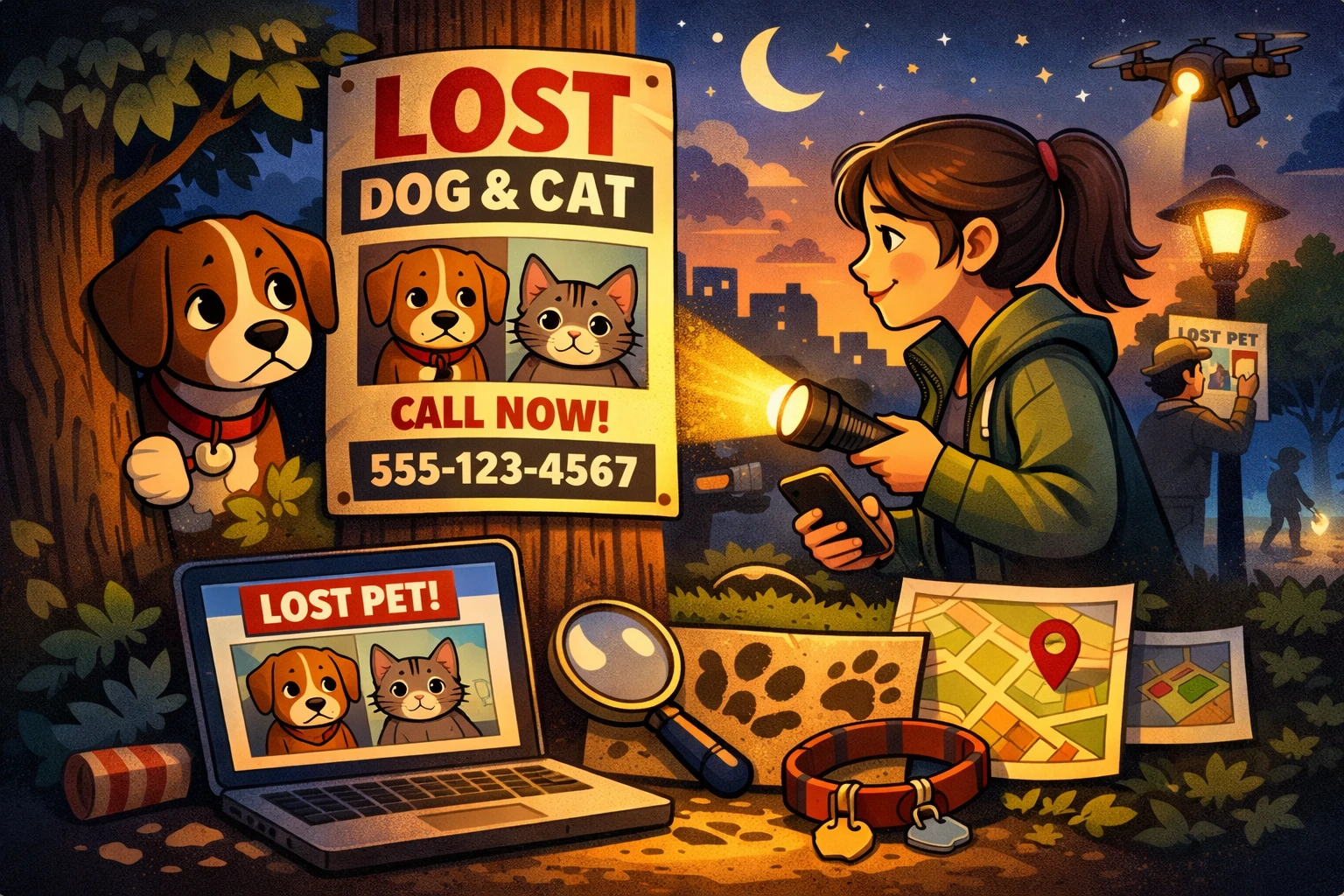
Losing a dog or cat is scary. It can feel unreal for a minute. Take a breath, then start with a simple plan. Fast action helps, and small details matter.
Use this guide for a lost dog, a lost cat, or any missing pet.
Do a quick 10 minute check at home first
Pets can tuck themselves into quiet spots. Run these checks fast, then head out.
- Look in closets, under beds, behind furniture, and inside cabinets.
- Check warm places like radiators, laundry piles, and sunny windows.
- Ask everyone to pause for 60 seconds and listen.
- Shake a treat bag, tap a food bowl, then listen again.
- Check doors, gates, garage corners, balconies, and open windows.
Collect the details people need to spot your pet
Put this in one note on your phone. You will copy it into posts and use it on calls.
- Pet name and nicknames
- Species and breed mix
- Age and rough weight
- Color, markings, coat length
- Collar color, tag info, harness, leash
- Microchip number and registry name
- Temperament: friendly, shy, skittish, may bite
- Last known location and time
- Direction seen moving, plus witness contact
Pick 2 to 3 clear photos. Use one full body photo and one face photo.
Search smart in the first hour
For a lost dog
Dogs can cover ground fast. Many follow roads, paths, smells, and people.
- Start at the last seen point and look for paw prints, droppings, and disturbed grass.
- Walk in expanding loops. Keep the first loops short.
- Bring high value treats, a squeaky toy, and a leash.
- Use a calm voice. Crouch low and turn your body slightly sideways.
- Skip chasing. Chasing often pushes a dog farther.
- Ask walkers, delivery drivers, and shop staff. Show a clear photo.
Some dogs bolt from fear. Switch to a calmer approach. Move slower, lower your voice, and keep food stations only where you can watch.
For a lost cat
Many cats stay close, then move more at night. Indoor only cats often hide nearby.
- Search close first. Check under decks, sheds, bushes, cars, and stairwells.
- Use a flashlight, even in daylight. Aim it into dark gaps and look for eye shine.
- Sit quietly near the last seen spot for 5 to 10 minutes.
- Call softly, then pause. Loud calling can push a shy cat deeper into hiding.
- Try another search after sunset and again at dawn. Streets are quieter then.
- Ask neighbors to check garages, basements, sheds, and crawl spaces.
Keep doors supervised. A rushed setup can lead to a second escape.
Call the right places early
Make calls right away. Log each call with the time, the person’s name, and the result.
- Local animal shelters and municipal pounds
- Animal control
- Nearby rescue groups that take strays
- Veterinary clinics near you
- Emergency vet clinics
Ask how they record found pets. Ask how often their intake list updates.
If your pet has a microchip, call the chip registry and confirm your phone number and address. Ask them to mark your pet as missing.
Put your lost pet online with a clear post
Online reach helps. Clear info helps more.
Post in local community groups, lost and found pet groups, and neighborhood apps. Keep the post short and easy to scan.
Include:
- One strong photo
- “LOST DOG” or “LOST CAT” at the top
- Cross streets, not only the city name
- Date and time last seen
- A phone number that can take calls
- A second contact, if you have one
Skip your full home address. Use cross streets and a safe meeting point.
You can also point people to your broader pet safety resources through Dog Guides.
Make a flyer strangers can read in 3 seconds
A good poster works from a car window.
Use this layout:
- Top line: LOST DOG or LOST CAT in big bold letters
- One large photo, not a collage
- One short line of key traits: size, color, special markings
- Cross streets and date
- Phone number in very large text
Save extra details for online posts and handouts.
Printing tips:
- Use bright paper.
- Use large font.
- Use waterproof sleeves or strong tape.
- Post at intersections, parks, trailheads, bus stops, and near stores.
A reward can help. You can write “REWARD” without listing an amount. That cuts down scam calls.
Use scent and routine to pull your pet back
Scent can help guide a pet. Routine can calm them.
- Place a worn t shirt or small blanket near the last seen spot.
- Put water nearby.
- Set food only with monitoring. Food can attract other animals.
- Keep a steady home routine for meals and quiet time.
For dogs, try to keep one person at home base. Some dogs circle back.
For cats, sightings can lead to a safe trap plan. Many rescue groups lend humane traps and give handling rules.
Handle sightings the right way
Sightings are gold. Panic wastes them.
Ask for:
- Exact time and exact location
- Direction of travel
- Photo or video
- Behavior during approach
Then move fast to the area. Switch to slow movement once you arrive.
For a lost dog: bring smelly treats, sit down, and avoid direct eye contact.
For a lost cat: bring a carrier, a blanket, and a flashlight. Move quietly and use soft calls.
Watch for common lost pet scams
Scammers target stressed owners. Use a simple check every time.
- Ask for a photo or live video.
- Ask about a detail a real finder would notice, like collar color or a marking.
- Never pay by wire, gift card, or crypto.
- Never share a one time code.
- Meet at a public place or a vet clinic that can scan a chip.
A claim about a vet visit is easy to verify. Call the clinic directly.
After 24 hours, switch to a steady system
After the first day, systems win.
- Visit shelters in person on a schedule.
- Refresh online posts with new photos and new wording.
- Replace damaged posters and post in new areas.
- Expand the search radius for dogs over time. Keep it tighter for indoor cats at first.
- Track every sighting in one note. Patterns can show up after a few reports.
For a timeline based checklist, use this: Lost Dog or Cat Checklist.
Once you find your pet, keep it calm and safe
Stay calm. A scared pet can bolt again.
- Approach slowly and crouch low.
- Use a soft voice and offer a treat.
- Secure a leash or close the carrier door before moving.
- Check for wounds, limping, heavy breathing, or shock.
- Book a vet check and a chip scan, even with no visible injury.
Then close the loop:
- Update posts with “FOUND” and the date.
- Remove posters.
- Thank the people who helped.
Prevention steps that cut repeat escapes
After your pet is home, do a few upgrades.
- Replace worn collars and add an ID tag with two phone numbers.
- Confirm microchip registry details and add an emergency contact.
- Practice recall training for dogs in safe areas.
- Add door routines like “wait,” leash by the door, and quick gate checks.
- For cats, add indoor enrichment and a plan for windows and balconies.
